A short guide
The prayer rope
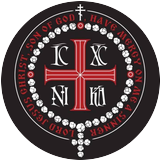
A prayer rope — komboskini in Greek, chotki in Russian, metanoia in some places — is a loop of knots used in Orthodox Christianity to keep count of prayers, most often the Jesus Prayer.
The Jesus Prayer
“Lord Jesus Christ, Son of God, have mercy on me, a sinner.”
One prayer is said for each knot. The rope is not a charm and holds no power of its own: it is a help to attention, so that the mind can rest in the prayer rather than in counting.
Where it comes from
Tradition attributes the prayer rope to Saint Pachomius, a monk of fourth-century Egypt. The story is that he tied a simple knot for each prayer, and that the devil kept untying them, so he devised a knot made of small woven crosses which the devil could not undo. The knot tied on prayer ropes to this day is made the same way.
The knots, the wool and the colour
Ropes are made with different numbers of knots. Thirty-three, one for each year of Christ’s life on earth, is common for a rope worn on the wrist; fifty, one hundred and three hundred are common for ropes held in the hand. Larger ropes are often divided by beads so that the place in the prayer is easy to keep.
Wool is traditional, and black is the traditional colour — the colour of the monastic habit. Ropes in other colours are made and used just as faithfully.
Praying with it
The rope is usually held in the left hand, leaving the right free to make the sign of the cross, and moved through one knot at a time, starting from the cross. Many people pray in the morning and evening; others keep the rope with them through the day.
How much to pray, and when, is a rule of prayer, and that is best set with your own priest or spiritual father rather than taken from a website. If you are buying a rope for the first time, it is a good thing to bring to them.